Defensible Space 101: How to Protect Your Home from Wildfire Damage
When you picture a wildfire, you probably imagine a roaring wall of flames. The real threat to your home, however, is much smaller and sneakier: an ember—a flying hot coal that can travel over a mile on the wind to land in your gutter or under your deck.
Post-fire analysis consistently shows these tiny embers ignite the majority of homes, not the main fire front. So, how does defensible space work to stop them? It’s a buffer zone around your property, a carefully maintained area designed to give flying embers nothing to burn when they land.
This is where your power lies. Following proven wildfire home protection tips gives your house a genuine fighting chance. This guide provides a concrete plan of action, showing you exactly where to start to turn helplessness into effective protection.
Your First 5 Feet: The Ember-Free “No-Burn Zone”
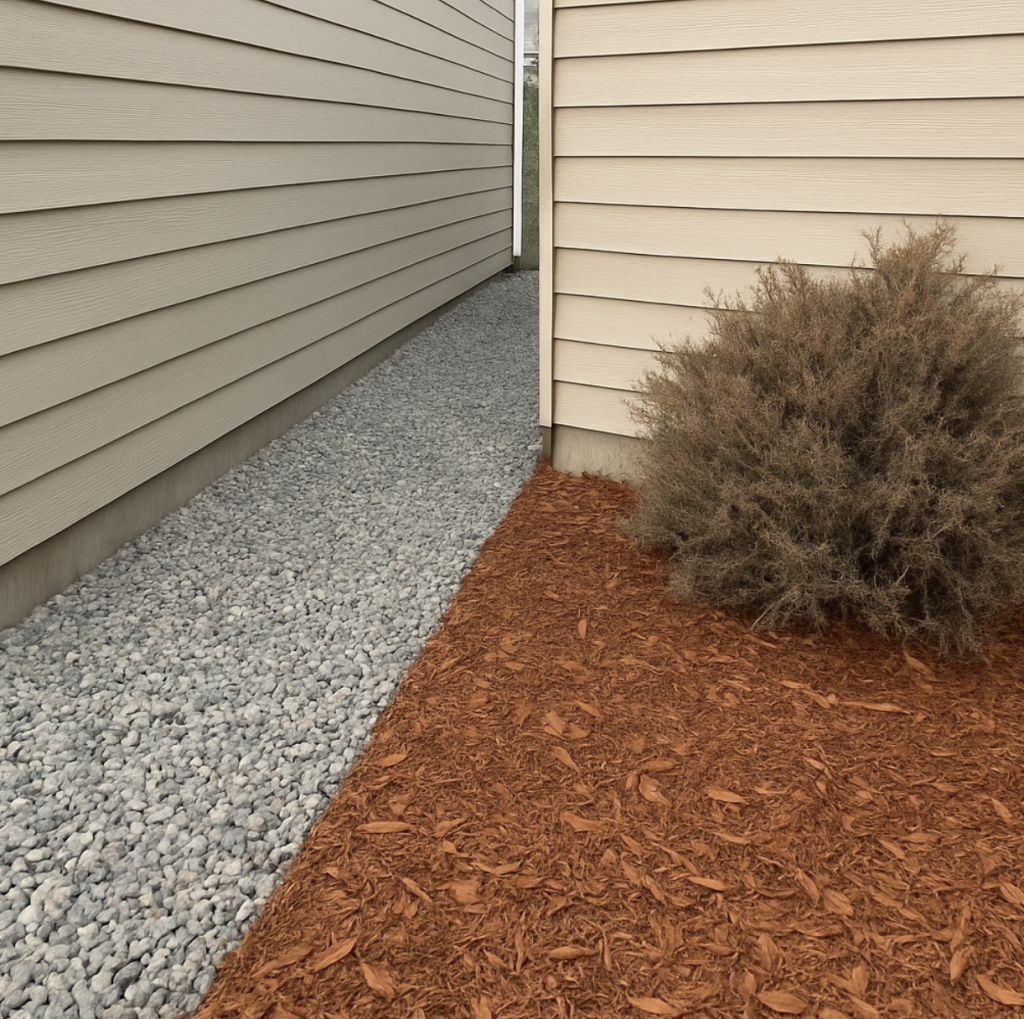
Since flying embers are the main threat, your first priority is the five feet immediately surrounding your foundation. Fire experts call this critical area Zone 0, and the goal is simple: make it an ember-free, “no-burn” zone. If an ember lands here, it should have absolutely nothing to ignite. This is the single most important action you can take to protect your structure.
This means removing everything that can burn from this narrow band. That includes common landscaping like bark or pine needle mulch, which acts like a tinderbox for embers. Clear away all dead leaves and grass. Move flammable items like wicker furniture, jute doormats, recycling bins, and firewood stacks well away from the house—your target is a minimum of 30 feet. Think of any item touching your home as a potential fuse.
Creating a non-combustible zone doesn’t require a barren dirt landscape. Instead of wood mulch, use attractive and fire-safe materials like gravel, pavers, or a concrete walkway. These alternatives create a clean perimeter that effectively starves embers of fuel. This key step in what’s known as home hardening is one of the most effective ways to prevent a small spark from becoming a disaster.
By securing this five-foot buffer, you’ve eliminated fire’s easiest pathway to your home and given it a powerful defense. With that immediate perimeter established, it’s time to expand our focus outward.
Go “Lean, Clean, and Green”: Your Action Plan for the 5-to-30-Foot Zone
With your immediate five-foot buffer secure, it’s time to manage the area extending 30 feet from your home. Fire experts call this Zone 1. The goal here isn’t to remove everything, but to create a landscape that is “Lean, Clean, and Green.” This simple strategy is key to slowing a fire’s spread and reducing the intense heat it can produce. It’s the difference between a yard that fuels a fire and one that fights back.
This approach is all about disrupting fuel continuity—the unbroken paths of flammable material that fire uses to travel. Imagine a trail of dominoes: if plants, weeds, and dry leaves are all touching, they create a direct fuse to your home. By creating space between shrubs and trees, you are effectively removing dominoes from the line. This forces an approaching ground fire to slow down or stop, giving firefighters a much better chance to defend your property.
A well-maintained Zone 1 makes it difficult for fire to gain momentum. Your focus should be on tidiness and strategic spacing to create a fire-resistant yard.
Zone 1 Checklist:
- Rake up and remove all dead leaves, pine needles, and twigs.
- Remove all dead or dying plants and grasses.
- Trim tree canopies to be at least 10 feet apart.
- Move woodpiles and propane tanks to Zone 2 (at least 30 feet from the house).
- Choose fire-resistant landscaping plants and keep them watered.
By creating these islands of healthy, spaced-out vegetation, you’ve made it much harder for fire to spread across the ground. Next, we’ll look at how to stop it from climbing upwards into your trees.
How to Break a “Fire Ladder” and Keep Flames on the Ground
A ground fire becomes a much bigger problem if it can climb into the treetops. The path it uses is what fire experts call a ladder fuel—a literal staircase for flames. Think of a large shrub growing directly under a pine tree’s low-hanging branches, or even just a patch of tall, dry grass. This continuous vegetation allows a small ground fire to “climb” into the main tree canopy, where it can grow in intensity, spread rapidly, and rain destructive embers onto your home and neighborhood.
Fortunately, breaking this fire ladder is one of the most effective and straightforward ways to protect your property. Your main job is to create a vertical gap that flames can’t easily jump. For most trees, simply trim the lower branches to create a space of at least 6 to 10 feet between the ground and the lowest limbs. This simple act of clearing robs the fire of its climbing path, forcing it to stay low where it is far less intense and much easier for firefighters to manage.
This work is the primary goal for Zone 2, the area extending from 30 to 100 feet from your home. The objective here isn’t a bare field, but a thinned, park-like environment that slows an approaching fire and keeps its flames small. A well-managed outer zone provides a crucial buffer, giving firefighters the safer space they need to make a stand and defend your property.
From One-Time Project to Simple Routine: Your Defensible Space Maintenance Plan
What once felt like an overwhelming threat is now understandable: the true vulnerability lies in small, wind-blown embers. Understanding the ‘why’ behind each safety measure gives you the power to take effective action.
Treat creating a defensible space not as a huge project, but as routine maintenance. The checklist is straightforward: keep the first five feet around your home clear of anything flammable, ensure the next zone is lean and green, and break up fire’s potential ladder in the outer areas. A seasonal walkthrough is all it takes to stay prepared.
This effort goes beyond passing a Cal Fire defensible space inspection; it protects people. When firefighters arrive, a well-maintained yard is a sign that a home is defendable. Your work doesn’t just give your house a fighting chance—it gives them a safe place to make their stand.