Benefits of Fire-Resistant Roofing in California
Every Californian knows the feeling: a sky turned hazy orange, the faint smell of smoke in the air. It’s easy to feel helpless, but what if the most important decision you can make to protect your home is right over your head?
Most people picture a wall of flame, but that isn’t how most homes catch fire. Research from the Insurance Institute for Business & Home Safety (IBHS) shows the real culprit is wind-blown wildfire embers, which can travel over a mile from the main blaze. Imagine thousands of glowing sparks carried on the wind, landing in neighborhoods far from the fire front.
Your roof acts like a giant catcher’s mitt for this ember storm. Because of its large, exposed surface, it is the single most targeted part of your home. This makes roofing safety absolutely critical, and it all starts with knowing how to protect your roof from wildfire embers.
What Is a Class A Fire Rating? Your Roof’s Report Card for Safety
With embers being the primary threat, your roof is your home’s most crucial defender. The simplest way to gauge its strength is the Class A fire rating. Think of it as a report card for fire safety—and ‘A’ is the best grade a roof can get. It signifies the highest level of fire resistance available, giving you the most robust protection.
But what does “highest level” actually mean for you? A Class A-rated roof is designed to effectively withstand severe fire exposure. It resists catching fire from embers landing on its surface and protects the flammable materials underneath from the intense heat of a nearby blaze, giving you critical time and defense.
This isn’t just an opinion; the rating is earned by passing a rigorous, standardized fire test that simulates these dangerous conditions. While Class B or C roofs offer some protection, only Class A provides the top-tier defense required in many high-risk areas. However, achieving this rating involves more than just the shingles you see.
It’s a System, Not Just a Shingle: The Secret to a True Class A Roof
When we picture a new roof, we usually think of the shingles or tiles on top. It’s a common mistake to assume that buying “Class A shingles” is all it takes. In reality, a roof’s ability to resist fire often depends on more than just that visible surface.
A truly fire-resistant roof is a complete system, known professionally as the roof assembly. Think of it like a firefighter’s protective coat—it isn’t just the outer shell but all the layers working together that provide safety. In roofing, the hidden layer of underlayment beneath your shingles is a critical part of that system, helping to block intense heat from reaching the flammable structure below.
This distinction is crucial when you hire a professional. To ensure you get the protection you’re paying for, ask your contractor for a complete “Class A roof assembly,” not just Class A materials. This confirms every component is working together to give your home the highest level of fire defense.
Common Materials That Can Achieve a Class A Fire Rating
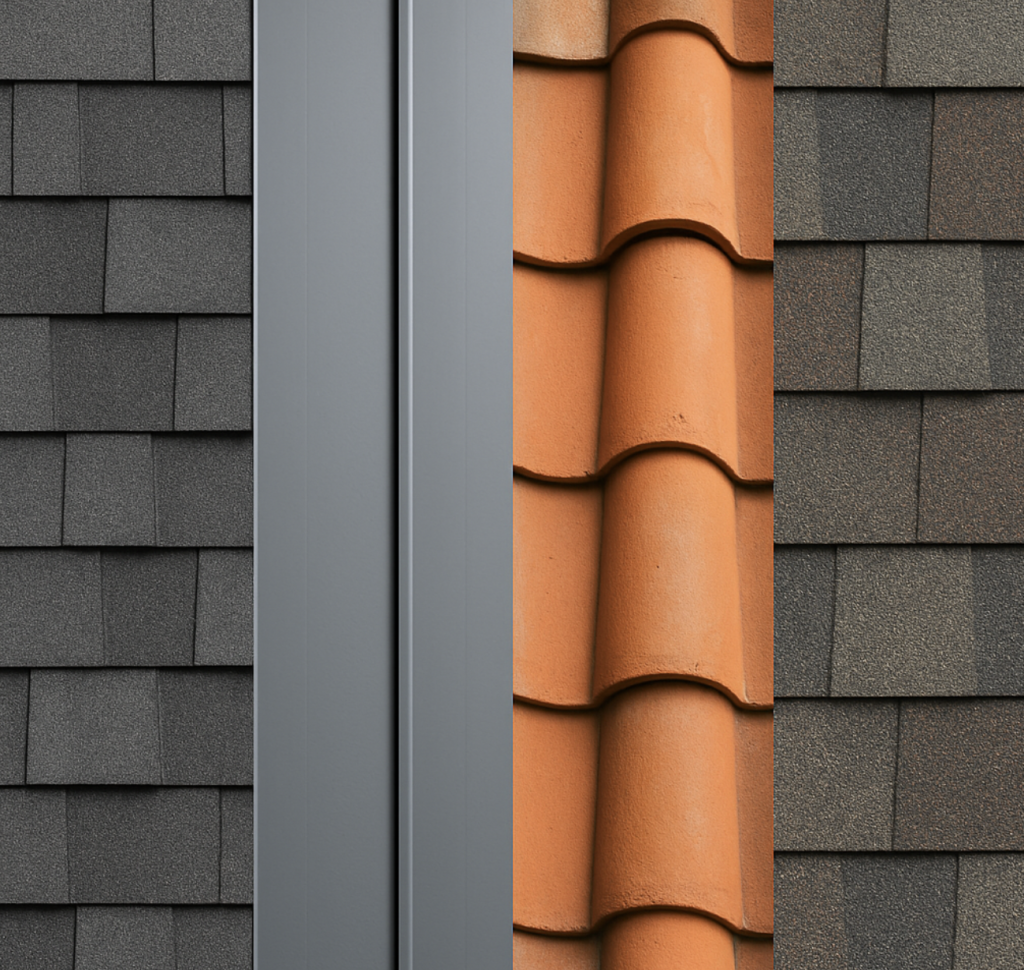
Fortunately, choosing a fire-resistant roof doesn’t have to limit your home’s style. Many of the most common and attractive roofing materials can achieve a Class A fire rating when installed correctly as a complete system. While you should always verify the specific product, here are the primary types you’ll encounter:
- Metal Roofing: Includes standing seam, shingles, and stone-coated steel.
- Concrete and Clay Tiles: Naturally non-combustible and highly durable.
- Asphalt Fiberglass Shingles: The most common roofing material in the U.S.; many (but not all) options carry a Class A rating.
- Composite Shingles: Modern materials designed to mimic slate or wood shake while providing top-tier fire resistance.
- Slate: A natural, fireproof stone that is extremely long-lasting.
Remember, the material type alone is not a guarantee. You must confirm the specific product you’re considering is listed as “Class A.” Whether comparing the fire safety of a composite shingle vs a metal roof, the ultimate proof is in the manufacturer’s label and your contractor’s specifications. This is especially important because your choice isn’t just about preference—in many parts of California, it’s also about the law.
Why a Class A Roof May Be Required for Your California Home
Your home’s location plays a huge role in its building requirements, especially in California. Many neighborhoods are designated as part of a Wildland-Urban Interface, or WUI (pronounced ‘woo-ee’). This is simply any area where houses and wildland vegetation meet or intermingle, from hillside communities to suburbs bordering open space. The state’s fire hazard maps, maintained by CalFire, determine which areas fall into this category.
Because homes in these zones face a much higher risk from embers and direct flame, state and local codes mandate stricter safety standards. For the most vulnerable part of your house—the roof—this almost always means a Class A assembly isn’t just a smart choice, it’s the law for new construction and reroofing. This makes it the best roofing for high fire risk areas by legal definition.
To be certain of your obligations, check directly with your local building department. A quick phone call or a visit to their website can confirm if your property is in a designated high fire risk area and tell you exactly what the California WUI roofing requirements are for your address. This step ensures your project is safe and up to code from the very start.
Beyond Safety: The Financial Benefits of a Fire-Resistant Roof
Beyond the invaluable peace of mind, a Class A roof offers tangible financial rewards. Many insurance companies provide a fire resistant roof insurance discount, recognizing that these materials dramatically lower their risk and yours.
This savings isn’t always automatic, however. When speaking with your provider, be sure to ask them directly: “Do you offer a mitigation credit for having a Class A fire-rated roof assembly?”
Finally, consider the initial cost to install a Class A roof in California as an investment. In a market where buyers prioritize safety, these superior roofing solutions become a powerful selling point, boosting your home’s long-term value.
Your 3-Step Action Plan for a Safer Roof
To turn this knowledge into action, here is a simple plan for choosing the right fire-resistant roof:
- Check Your Zone: Call your local building department to learn the specific roofing requirements for your address.
- Talk to a Pro: When getting quotes, specifically ask for a “complete Class A roof assembly” and verify the components on the estimate.
- Call Your Insurer: Ask your agent about potential discounts for installing a Class A roof before you sign a contract.
By following these steps, you take control. Your roof is no longer a source of anxiety but your home’s strongest shield against wildfire, providing you and your family lasting peace of mind.