Commercial Fireproofing Requirements in California (IBC & Local Codes)
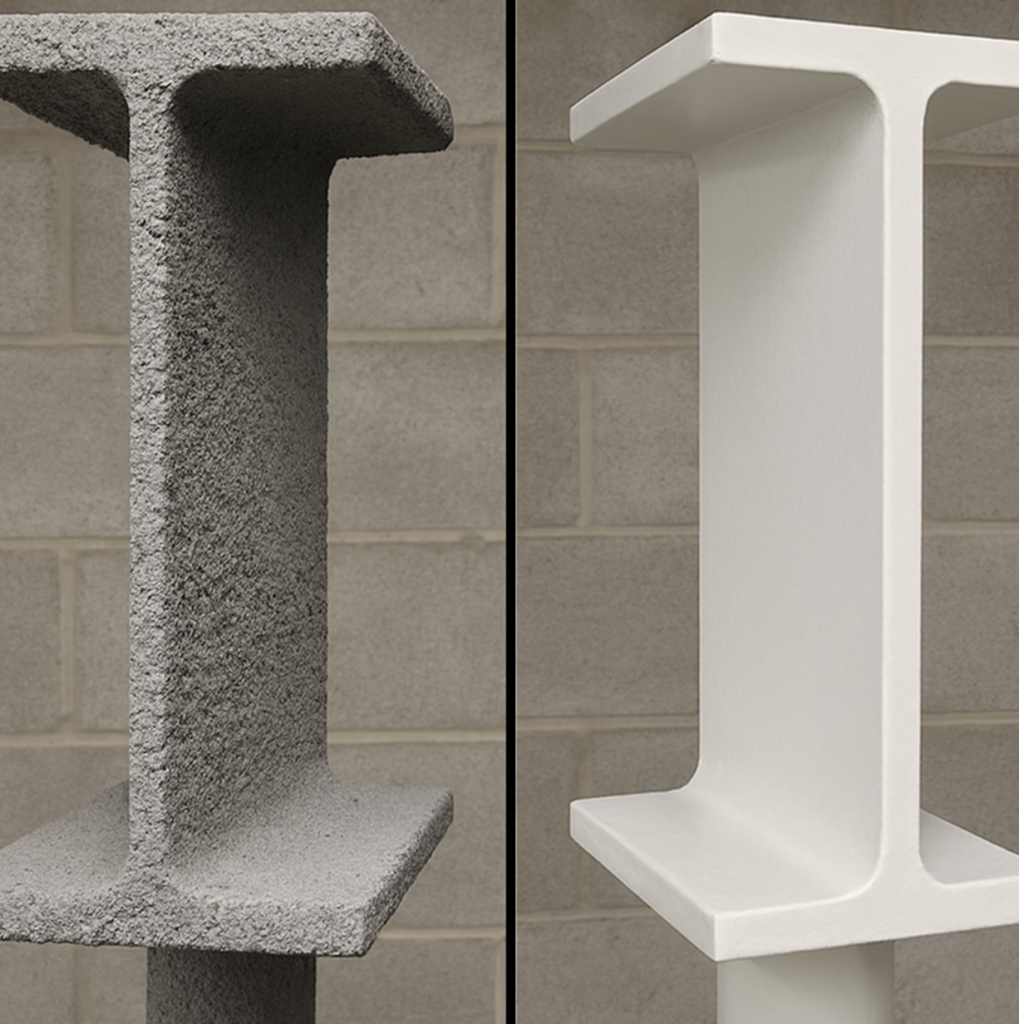
Ever noticed that chunky, gray material sprayed onto steel beams in a parking garage or warehouse? That’s fireproofing, and its main job is one of the most important in any building: it buys time.
In a fire, time is everything. While active systems like sprinklers fight flames, this passive protection shields a building’s skeleton from the intense heat that leads to structural collapse. This protection gives everyone a crucial window to evacuate safely and for first responders to arrive, making it a building’s last and most vital line of defense. Because this is a matter of life and death, California has specific commercial fireproofing requirements that all property owners must understand to keep people safe.
Why Sprinklers Aren’t Enough: Understanding “Passive” Fire Protection
Everyone knows about fire sprinklers and alarms. These are called active fire protection because they take action—spraying water or sounding an alert—when a fire breaks out. They are the building’s first responders, but they are only one half of a complete safety strategy.
This is where passive fire protection systems come in. Unlike active systems, passive protection doesn’t “do” anything. It consists of the materials built right into your structure, like fire-rated walls and special coatings on steel beams. Its job is to contain a fire in one area and shield the building’s skeleton from heat. These measures prevent a structural collapse, which is why California’s fire safety regulations are so strict about them. Think of it this way: active systems fight the fire, while passive systems buy you time, ensuring escape routes stay open even if other systems fail.
What Is This Stuff? Common Types of Fireproofing You’ll See
The most common type of commercial fire protection is the thick, lumpy gray coating on steel beams you might see in a parking garage. That is a Spray-Applied Fire-Resistive Material (SFRM). It acts as a thick insulating blanket, shielding the steel from a fire’s intense heat so the building’s frame doesn’t weaken and fail.
For areas where steel is exposed and aesthetics matter, a different solution is used. Intumescent paint looks just like a smooth layer of thick paint, but it holds a remarkable secret. When exposed to high heat, this coating swells up to many times its original thickness, creating a puffy, char-like barrier that insulates the steel underneath. Whether it’s the rugged SFRM spray or the sleek intumescent paint, the goal is identical: to create an insulating barrier that buys precious time for people to evacuate safely.
Where to Look: 3 Critical Places Fireproofing is Required in Your Building
Fire codes are strategic, placing protection where it can do the most good to contain a fire and protect lives. For most commercial businesses, inspectors and building codes focus intensely on three critical zones:
- Walls separating your business from a neighbor. This is a tenant separation wall, designed to keep a fire in one unit from spreading to the next.
- The steel beams and columns holding the building up. This structural fireproofing prevents a catastrophic collapse from the heat.
- Hallways and stairwells that serve as escape routes. Known as the exit corridor, these paths must be shielded to guarantee a safe way out.
Think of these three areas working together: one contains the fire, another keeps the building standing, and the third protects your path to safety. Each is required to hold back a fire for a specific amount of time, known as a fire-resistance rating.
What Does a “1-Hour Rating” Actually Mean?
A fire-resistance rating, expressed as a “1-hour” or “2-hour” rating, tells you how long a wall or steel beam must hold up against a fire. This isn’t about being indestructible; it’s about providing a guaranteed window of safety for evacuation. A one-hour fire-rated wall assembly, for example, is built to keep fire and intense heat on one side for at least 60 minutes.
This highlights a crucial distinction: materials are “fire-resistant,” not “fireproof.” They are engineered to sacrifice themselves to protect what—and who—is on the other side. These ratings aren’t just estimates; they are the result of rigorous, standardized fire test standards, like the ASTM E119 test, ensuring that a “1-hour” rating is a reliable benchmark across the country.
The Rulebook Hierarchy: How State and Local Codes Work Together
Determining which fire-resistance rating your building needs requires consulting a few layers of rules. The International Building Code (IBC) is the master recipe, which the California Building Code (CBC) then amends with its own ingredients—found in sections like Chapter 7—to address state-specific risks like earthquakes.
Your local city or county then adds the final touch with its own ordinances, such as specific Los Angeles fireproofing permit requirements for dense urban areas. This creates the golden rule of compliance: you must always follow the strictest rule that applies. If the state requires a 1-hour rating but your city demands a 2-hour rating, you must meet the 2-hour standard. Ultimately, your local fire marshal or building department official has the final say during inspections.
Your 3-Step Action Plan: How to Check Your Commercial Property Today
Awareness of your building’s hidden shields—the fire-rated walls and protected columns—is your first and most powerful tool for ensuring California fire safety. To turn this awareness into action and ensure fire code compliance, start with this preliminary check:
- Walk Your Space: Look for obvious damage like scraped-off fireproofing on beams or unsealed holes in walls around new pipes/wires.
- Review Your Lease: Understand who is responsible for maintaining fire safety systems—the landlord or the tenant.
- Ask a Professional: For a definitive commercial building fireproofing inspection, contact a licensed contractor or your local fire marshal’s office.
These simple steps transform you from a passive occupant into a proactive leader in your building’s safety.