How Wind-Blown Embers Start House Fires (And How to Protect Your Home)
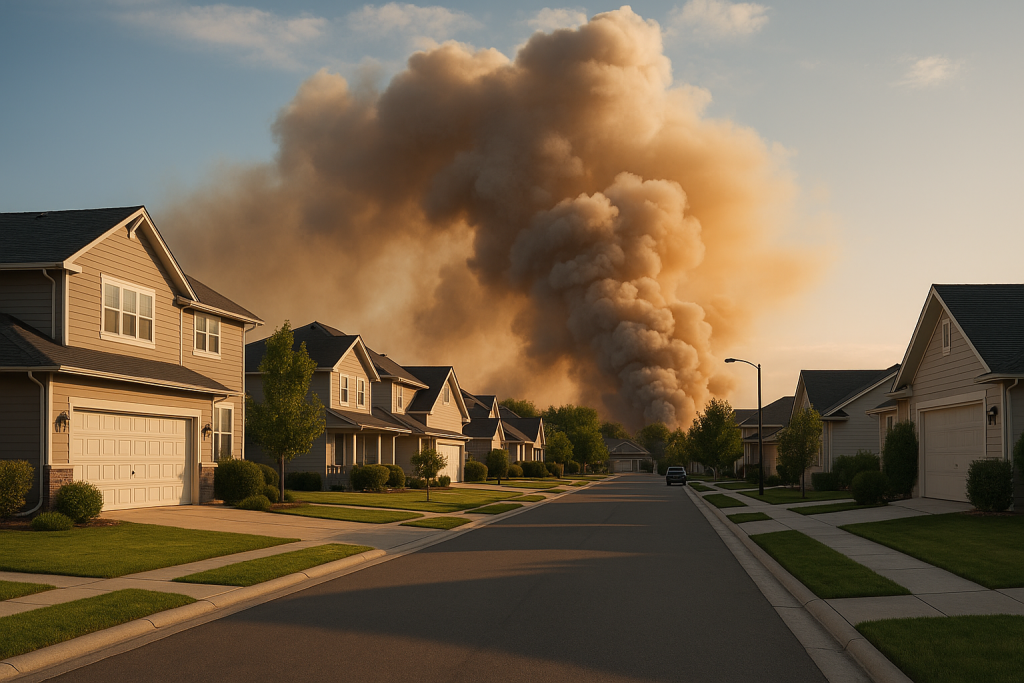
When you picture a wildfire threatening a home, you likely imagine a giant, roaring wall of flames. But the number one threat is actually much smaller and far more insidious: a relentless storm of tiny, wind-blown embers that can attack your home long before the main fire arrives.
Think of them as flying coals—lightweight, burning bits of bark, leaves, and wood. A wildfire’s intense wind creates a “firebrand shower,” a blizzard of millions of glowing embers. An ember the size of your fingernail carries enough heat to ignite dry leaves in a gutter or a welcome mat on your porch, which explains how ember spread happens so quickly.
Fierce winds can carry these fire embers much farther than people realize. Wildfire researchers have found they can start new fires more than a mile ahead of the blaze. This is why a distant fire can suddenly become a direct threat, as these tiny travelers search for a place to land and ignite around your home.
The “Ember Audit”: Finding Your Home’s 3 Most Common Entry Points
To understand your home’s weak spots, you have to think like an ember: small, glowing, and carried by the wind. The most vulnerable parts of a house are often not the big walls, but the tiny openings. Start with your attic, foundation, and crawlspace vents. While they keep pests out, many have wire mesh with openings 1/4-inch or wider—more than enough space for a wind-driven ember to pass straight through into the most flammable parts of your house.
From there, look at the nooks and crannies on your roof and siding. A simple, smooth roof gives embers few places to land, but complex rooflines with valleys or sections where a second-story wall meets a first-story roof are perfect traps. Wind can pack embers into these corners, where they sit like coals in a grill, heating the siding and roofing until they ignite. Identifying these collection points is key to an effective ember protection plan.
Finally, crouch down and inspect the very bottom of your home. The gap underneath a wooden deck or the small space at the base of your siding can become a deadly entry point. An ember that lands here is sheltered from the main force of the wind, giving it a protected place to smolder against your foundation or the deck’s understructure. It doesn’t need a large opening, just a quiet spot with something to burn.
Why Your Clean-Looking Yard Could Be Full of Fire-Starting Fuel
After identifying where embers can get in, the next step is removing the “welcome mat” you may have unknowingly laid out for them. A yard that looks tidy isn’t always a fire-safe yard. Often, the most dangerous items are normal landscaping features that provide the perfect fuel for an ember to ignite your home. Look up first. If your gutters are filled with dry leaves and pine needles, they aren’t just clogged—they are kindling boxes attached directly to your roofline. An ember landing there has everything it needs to start a fire that can quickly spread, making regular gutter cleaning a critical fire prevention task.
Now, look down at the area where your house meets the ground. Many homeowners use flammable mulches like shredded bark or pine straw right up against their foundation. While great for curb appeal, these materials act as a wick, allowing a small fire started by an ember to climb directly onto your home’s siding. This is a primary way homes ignite. When landscaping for fire-prone areas, a simple five-foot buffer of non-flammable material like rock or pavers around your home can stop this from happening.
It’s not just the landscaping; everyday objects create a dangerous bridge for fire. Think about the flammable items you keep right next to your house. Fire experts point to these “hidden fuels” as major risks:
- Dry leaves and pine needles in your gutters.
- Flammable bark or pine straw mulch within 5 feet of your home.
- A natural-fiber doormat or wicker furniture on a wooden porch.
Managing these fuels is made easier by creating a defensible space zone, a proven method for prioritizing your efforts.
The Home Ignition Zone: Your “Bullseye” Plan for Wildfire Defense
Thankfully, you don’t have to tackle your entire property at once. Fire experts developed a simple, proven system for this: the defensible space zone. The best way to visualize this is to picture a large bullseye painted on your property with your house at the dead center. This entire area, extending up to 100 feet from your foundation, is what professionals call the Home Ignition Zone (HIZ). Managing this zone is one of the most effective protection strategies, as it systematically removes the fuel embers need to ignite your home.
This bullseye has three priority zones. The most important is the one closest to your home, called the Immediate Zone (Zone 0), which covers the area from 0 to 5 feet out from your foundation. This is a non-combustible zone where nothing flammable should be present. The next ring, the Intermediate Zone (Zone 1), spans from 5 to 30 feet and is a “lean, clean, and green” space. The final ring, the Extended Zone (Zone 2), reaches from 30 to 100 feet, where the goal is simply to reduce fuel and thin vegetation.
The system’s logic is powerful: the closer a fuel source is to your house, the more dangerous it is. An ember lighting a bush 50 feet away is a concern; an ember lighting a bark mulch bed right against your siding is a direct and immediate threat. This is why home hardening for wildfires always starts in that first, most critical ring. By focusing your time and energy on the 0-5 foot zone first, you get the biggest possible return on safety.
Action Step 1: Create a Non-Combustible “Moat” in Your Immediate Zone (0-5 ft)
Think of the first five feet out from your foundation as a non-combustible “moat” protecting your home. If a wind-blown ember lands here, it should find absolutely nothing to burn. This is the single most critical step in creating a defensible space, because a fire burning right against your siding can quickly overwhelm the structure. Your goal is simple: make this narrow band completely inhospitable to fire, creating the first line of defense for your home.
For many homeowners, the biggest fire hazard in this zone is flammable mulch. Common choices like bark, pine straw, and wood chips are essentially kindling piled against your foundation. An ember landing in this material is like a match dropped in a tinderbox. Instead, swap these out for non-combustible options like gravel, pavers, or concrete. These materials create a clean, fire-resistant border that will stop embers cold.
This “nothing-can-burn-here” rule applies to more than just landscaping. Walk around your house and look for anything combustible resting within that five-foot zone. That means moving firewood piles, relocating wicker or plastic patio furniture, and finding a new spot for that bristly welcome mat. Even items like brooms, recycling bins, or stored lumber leaning against the wall must go. Clearing this critical area eliminates the most immediate threat.
Action Step 2: Make Your Yard “Lean and Clean” in the Intermediate Zone (5-30 ft)
With the “moat” established, the next ring to address is the area from 5 to 30 feet from your home. The goal here isn’t to have a barren dirt lot, but to create a landscape that slows fire down by interrupting its path. This “lean and clean” approach robs an approaching ground fire of the continuous fuel it needs to build intensity and reach your walls.
A crucial concept for this zone is eliminating “ladder fuels.” Picture a small fire burning in dry grass. If that grass is touching the low-hanging branches of a shrub, the flames can easily “climb” the shrub like a ladder to reach the taller tree canopy above. To break this ladder, prune tree branches up at least 6 to 10 feet from the ground. This simple “haircut” creates a vital vertical gap that stops a ground fire from becoming a much more dangerous crown fire.
Beyond vertical space, you also need to think horizontally. Fire spreads by jumping from one plant to the next. Arrange trees and shrubs in small, well-spaced islands rather than dense, connected rows. This strategy creates natural “fuel breaks” that force a fire to fizzle out. Grouping plants this way makes it much harder for flames to build momentum as they move across your property.
Finally, keep the ground itself tidy. This entire 5-to-30-foot zone should be regularly raked free of fallen leaves, pine needles, and dead grass. This flammable “carpet” provides a pathway for fire to travel across your yard. A clean yard isn’t just about curb appeal; it’s a fundamental part of your defense.
Action Step 3: Harden Your Structure Against an Ember Attack
Yard cleanup is a fantastic first step, but the final line of defense is the house itself. Since embers rain down from above, your roof is the single largest surface area at risk. If you have an old wood-shake roof, it’s like having a layer of kindling waiting for a spark. When it’s time for a replacement, choosing materials with a Class A fire rating—the highest level of resistance—is one of the most effective upgrades you can make. Fire-resistant options like metal, asphalt shingles, and tile are designed to prevent flying embers from taking hold.
Beyond the roof, a home’s most surprising weak points are its vents. Attic, foundation, and soffit vents are essentially open invitations for embers, which are small enough to pass through standard ¼-inch screens. Blocking these entry points is critical. The solution is a simple weekend project: cover all vent openings with 1/8-inch metal mesh (often sold as “hardware cloth”). This finer screen is small enough to stop embers while still allowing your home to breathe. This low-cost upgrade closes the door on one of a fire’s sneakiest entry methods.
Finally, consider what your house is built with and what’s attached to it. A wooden deck or fence connected to your home can act as a fuse, carrying fire directly to your siding. If you’re building a new deck or replacing an old one, look into ignition-resistant composite materials. By reinforcing your roof, vents, and attachments, you are “hardening” your home, turning it from a vulnerable target into a structure prepared to withstand an ember storm.
Your Wildfire Preparedness Checklist: Weekend Tasks and Long-Term Goals
You might once have pictured a wildfire as a roaring wall of flames, but now you know the real threat is a quieter, more persistent storm of wind-blown embers. This knowledge is your greatest advantage. While you can’t stop a wildfire from starting, you can prepare your home to resist it.
Putting this knowledge into action doesn’t have to be overwhelming. This checklist breaks down home hardening into manageable steps.
- This Weekend: Clean all leaves and debris from your roof and gutters. Create a 5-foot non-combustible zone around your home’s foundation. Move any firewood piles at least 30 feet away from all structures.
- This Season: Prune tree branches so they don’t overhang the roof and remove “ladder fuels.” Rake and clear the area 5 to 30 feet from your home. Install 1/8-inch metal mesh over all attic and crawlspace vents.
- Long-Term Plan: When it’s time for major upgrades, budget for a fire-resistant Class A roof and plan to replace any wooden fences or decks attached to your house with non-combustible materials.
Every step you complete builds a layer of protection. Once you’ve finished a few tasks, document your work with photos and call your insurance agent. Many people ask, “does homeowners insurance cover wildfire damage?” Not only is coverage often available, but your documented efforts in home hardening may qualify you for better rates or a discount. You now see your home not as a potential victim, but as a defensible space you have the power to protect.