What Is an Ember Attack? Wildfire Risks Every Homeowner Should Know
When you picture a wildfire, you probably imagine a giant wall of flames. But what if that’s not the biggest threat to your house? For most homeowners, the true danger is smaller, travels much farther, and arrives long before the main fire. This hidden wildfire risk is known as an ember attack, and it’s the primary reason homes are lost.
Think of it like a storm of fiery dandelion seeds carried on the wind. Research from the Insurance Institute for Business & Home Safety (IBHS) shows that these small, glowing embers—not the main fire front—are how most houses ignite during a wildfire. They get swept into a home’s nooks and crannies, looking for a small spot to set alight.
This might sound frightening, but it’s actually good news. While you can’t stop a wall of flames, you have significant power to defend your home against embers. Making a few simple changes can dramatically increase your home’s chance of survival.
How Far Can Wildfire Embers Travel? (Farther Than You Think)
It’s natural to measure wildfire danger by how close the flames are. But for embers, distance can be dangerously misleading. Fire experts have documented cases where embers, carried by strong winds, have started new fires more than a mile away from the main wildfire. This means your home doesn’t need to be anywhere near the roaring fire front to be in the direct path of danger.
A large wildfire generates its own intense weather, creating a powerful updraft that can launch millions of tiny, glowing embers high into the air. Once airborne, the prevailing winds take over, carrying them like a blizzard of sparks. This isn’t just a few stray sparks from a campfire; it’s a full-blown ember storm that can blanket entire neighborhoods far from the original blaze.
This long-distance travel is a game-changer for homes that might seem safe. The threat isn’t just for cabins deep in the woods. If your suburban house is within a mile of a large park, a canyon, or even a field of dry grass, you are vulnerable. Since these fiery particles can easily reach your property, it’s critical to understand where they are most likely to land and cause trouble.
Where Embers Hide: Your Home’s Top 5 Vulnerability Hotspots
An ember landing on your concrete driveway is harmless, but that same ember landing in a pile of dry leaves can quickly become a serious threat. Fire experts call these inviting targets “receptive fuel beds”—but you can just think of them as easy kindling. Because embers are small and travel with the wind, they excel at finding vulnerable spots we often overlook during routine home maintenance.
To protect your property, you need to see it through the “eyes” of an ember. Research from homes that have survived wildfires consistently points to the same few problem areas. Here are the top five hotspots where a tiny ember is most likely to ignite a house:
- Gutters filled with dry leaves or pine needles.
- Flammable mulch (like bark or pine straw) within five feet of the foundation.
- Vents for the attic or crawlspace that have large, unscreened openings.
- Underneath decks and in the gaps between deck boards where debris collects.
- Flammable objects right next to the house, like bristly doormats, woodpiles, or cushioned patio furniture.
That decorative bark mulch right next to your siding can smolder for hours after an ember lands, eventually igniting the wall. Likewise, the space under a deck can become a trap for windblown leaves, creating a hidden spot for embers to start a fire that attacks the house from below. The greatest risk often comes not from one big vulnerability, but from many small, easy-to-fix details. Fortunately, addressing them is one of the most powerful things you can do to protect your home.
The 5-Foot “No-Burn” Zone: Your First and Best Line of Defense
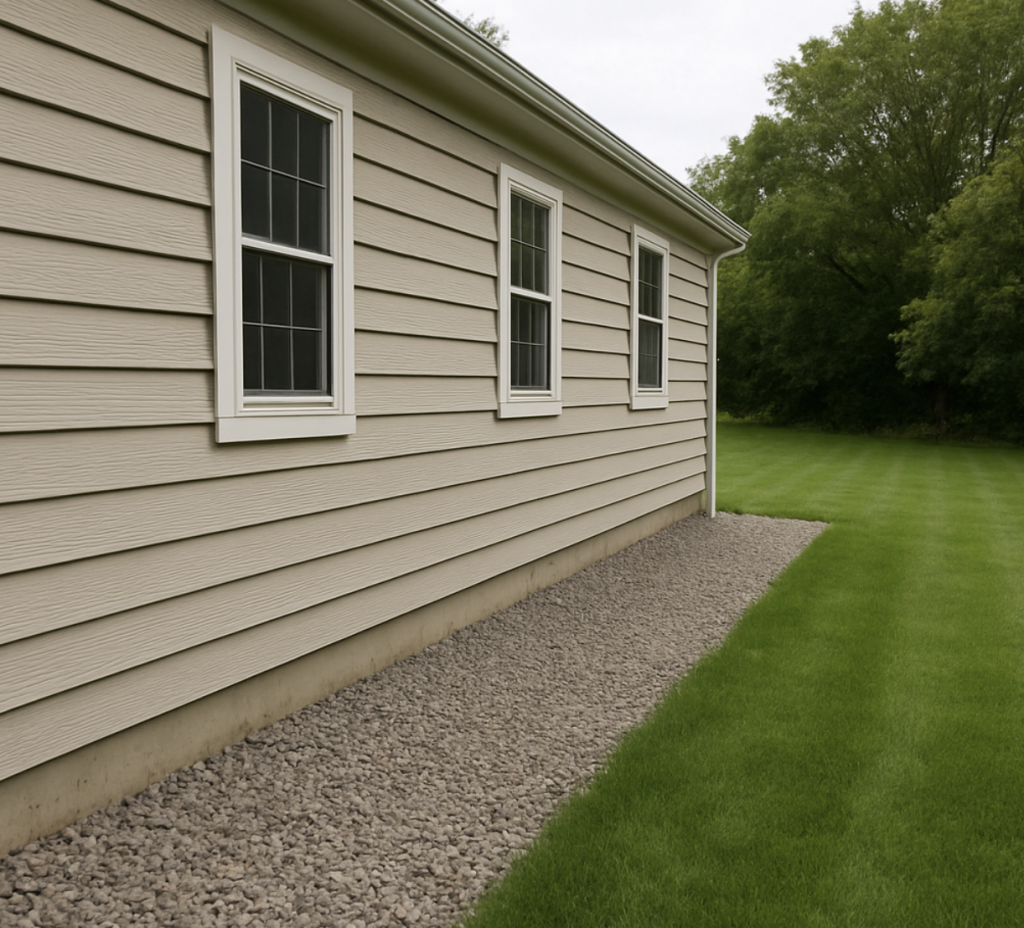
The area around your property is called the Home Ignition Zone (HIZ)—a safety bubble that you control. The most important part of this bubble is the five feet immediately surrounding your foundation. Think of this as a non-combustible “welcome mat” for your home. Its single purpose is to ensure that if an ember lands near your house, it has absolutely nothing to burn.
Creating this buffer is straightforward and has a massive impact on your home’s survivability. The goal is to remove any fuel that could allow a fire to make contact with your siding or crawl under your eaves.
Your checklist for the 0-to-5-foot zone:
- Replace flammable mulch (like bark or pine straw) with non-combustible options like gravel, pavers, or concrete.
- Rigorously clear all dead leaves, pine needles, and other debris from this area.
- Remove “fire ladders”—anything that could carry flames up your wall, such as shrubs planted against the house or low-hanging tree limbs.
- Move firewood stacks and other flammable materials at least 30 feet away from the house.
- Choose non-flammable patio furniture, doormats, and planters for this immediate zone.
By keeping this 5-foot area completely clear of anything that can burn, you eliminate the most common way wildfires ignite homes. You’ve effectively stopped a small ground fire from ever reaching your structure. Once this critical first line of defense is secure, you can expand your efforts outward to further reduce the risk.
Create a “Fuel Break”: How to Manage the 5-to-30-Foot Zone
With your home’s immediate perimeter clear, the next step is to expand that safety bubble outward. The area extending from 5 to 30 feet away from your foundation is what firefighters call defensible space. The goal here isn’t to create a bare patch of dirt; it’s to create a fuel break. This is a landscaped area designed to rob an approaching wildfire of its power, forcing it to slow down and stay low to the ground, where it is far less dangerous.
Managing this zone is about making smart, simple choices in your landscaping. Fire experts use an easy-to-remember principle for this: keep your yard “Lean, Clean, and Green.” This approach disrupts the path a fire wants to take, creating gaps in the fuel so that a small ground fire can’t easily climb into trees or build momentum as it nears your home.
Here’s what this firewise landscaping looks like in practice:
- Lean: Create space between trees and large shrubs. You want to prevent a fire from easily jumping from one plant to another.
- Clean: Remove ground clutter like fallen leaves, dry twigs, and pine needles. Critically, prune tree branches so there are at least 6 to 10 feet of clearance between the ground and the lowest limbs. This stops a surface fire from climbing into the treetops.
- Green: Maintain healthy, well-irrigated lawns and plants (where appropriate for your climate). Short, green grass is much less likely to carry a fast-moving fire than tall, dry weeds.
Hardening Your Home’s Shell: Vents, Roofs, and Windows That Resist Embers
Clearing the space around your home is essential, but the battle against embers is also won on the structure itself. This is called home hardening—making the building’s exterior as fire-resistant as possible. While you might worry about a fire burning through a wall, embers often find a much easier way in. They are notorious for getting sucked into attic, foundation, or gable-end vents, where they can land on flammable insulation or wood framing and ignite a fire from within.
One of the most effective upgrades you can make is installing ember-resistant vents. These look like normal vents but have a critical difference: a fine metal mesh, typically 1/8-inch or smaller. This screen is small enough to block wind-driven embers from entering your attic or crawlspace while still allowing your home to breathe. It’s a simple concept that closes one of the most common and dangerous entry points for wildfire.
Your roof is another primary target, acting as a giant landing pad for embers. For this reason, its material matters immensely. The gold standard is a Class A fire rating—the highest level of fire resistance a material can achieve. A Class A roof is designed to not catch fire from embers landing on its surface, dramatically increasing your home’s odds of survival.
Fortunately, many common and affordable roofing materials carry this top rating. Modern asphalt shingles, metal roofing, and concrete or clay tiles are all excellent Class A choices that create an armor-like shell for your home. Along with double-pane windows, these fire-resistant building materials work together to keep embers out and give your home its best chance to withstand a wildfire.
Your 5-Step Weekend Wildfire Prep Plan
You can make your home more resilient to wildfire by tackling a few high-impact actions in a single weekend. This wildfire home protection checklist focuses on the most common weak spots where embers ignite homes, turning your knowledge into a concrete, protective barrier.
Here are five critical steps to work on:
- Clean All Gutters and Roof Valleys: Remove every last leaf, pine needle, and piece of debris. These are prime collection spots for embers.
- Clear the 5-Foot “No-Burn” Zone: Rake away flammable mulch, dry leaves, and dead plants from the area immediately surrounding your foundation.
- Inspect and Clean Under Decks: Sweep out any leaves or debris that have collected underneath your deck or porch, as this hidden fuel can ignite your home from below.
- Move Your Woodpile: If you have firewood stacked against the house, move it at least 30 feet away from any structures.
- Check Your Vents: Walk around your house and visually inspect all attic and crawlspace vents. Ensure the screens aren’t torn, damaged, or have openings larger than 1/8-inch.
You Have the Power to Protect Your Home from Wildfire
The immediate threat from a wildfire is often not a distant wall of flames, but a storm of tiny embers. The good news is that you have the power to defend your property against this primary danger. An effective wildfire risk management strategy is a straightforward, two-part approach: denying embers a place to ignite by hardening your home’s structure, and clearing the fuel they need by managing the space around it. This is the central lesson in any wildfire home hardening guide.Protecting your home isn’t about fear; it’s about smart, proactive home protection. Start with one task this weekend—like clearing that first five feet around your foundation—and you will have taken a powerful step toward securing your peace of mind.