Cool Roofs Explained: How Reflective Roofing Saves Money in Hot Climates
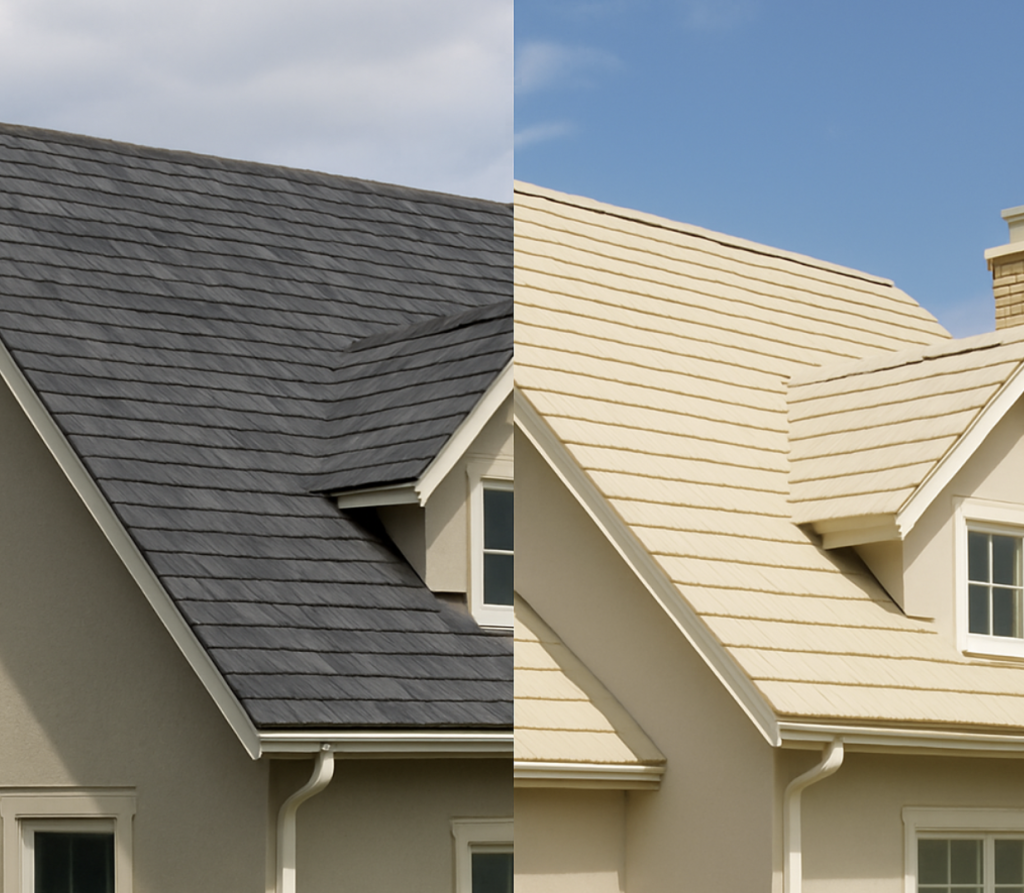
Does your air conditioner seem to run non-stop from May to September? As summer temperatures climb, it can feel like a losing battle against the heat. You might be surprised to learn one of the biggest culprits is the giant, heat-absorbing panel right over your head: your roof.
You already know this principle from experience—a dark t-shirt feels much hotter on a sunny day than a light one because it absorbs the sun’s energy. A cool roof simply applies that same common-sense idea to your entire home, turning what is often a major heat source into a heat shield.
According to the Department of Energy, a standard dark roof can reach temperatures over 150°F, baking your house from the top down. A cool roof, however, can stay up to 50 degrees cooler under the same sun. This dramatic difference leads to a more comfortable home and a practical way to lower your air conditioning costs.
What Is a “Cool Roof” and How Does It Actually Work?
A cool roof is a roofing system designed to reflect more sunlight and absorb less heat than a standard roof. It works through a powerful one-two punch: reflecting sunlight and quickly shedding any absorbed heat.
Reflecting the sun’s energy is the main job. But a second, equally important feature is that these materials are also excellent at quickly releasing whatever heat they do absorb. This is a key reason why a certified cool roof is far more effective than just a coat of white paint; the materials are engineered to shed heat efficiently, so they don’t continue radiating warmth into your attic long after the sun has gone down.
Instead of your roof acting like a giant, heat-soaking sponge, it becomes a shield that actively pushes heat away. This simple but effective science is what leads directly to the real-world payoff: a cooler home and lower energy bills.
The Real-World Payoff: A Cooler Home and Lower Energy Bills
All that science is impressive, but what does it mean for your wallet? A cool roof directly lowers your air conditioning costs. The U.S. Department of Energy estimates that homeowners can save 7-15% on their annual cooling bills. In hot climates, that often translates to a tangible savings of $20 to $50 per month during the peak of summer—hundreds of dollars back in your pocket each year.
Beyond the direct savings, there’s a noticeable improvement in your home’s comfort. By keeping your roof from baking in the sun, a cool roof can lower the temperature in your attic by as much as 30 degrees. This prevents that intense heat from radiating down into your living spaces, making your entire home—especially those hard-to-cool upstairs bedrooms—feel more pleasant and less stuffy on a hot afternoon.
There’s also a significant, often-overlooked benefit for one of your home’s most expensive appliances: your air conditioner. Because your house stays naturally cooler, your AC system doesn’t have to run constantly just to keep up. This reduced strain not only saves energy but can also help extend the lifespan of your unit, saving you from premature replacement and costly repair bills down the road.
Your Options: Do Cool Roofs Have to Be Bright White?
When you hear “cool roof,” you might picture a glaringly white surface that stands out in the neighborhood. The good news is, you have far more options. While white is the most reflective, modern technology gives homeowners a wide variety of materials and colors to choose from.
The choice often comes down to three main types. Each can turn your roof into a heat-fighting shield:
- Reflective Coatings: This is a thick, durable, paint-like layer that can be applied over many existing roof surfaces. It’s a popular way to upgrade a roof without a full replacement.
- Cool Asphalt Shingles: These look just like traditional shingles but are made with special granules that reflect sunlight. They come in many popular colors, from light grays and tans to muted earth tones.
- Metal Roofing: Naturally good at reflecting heat, metal roofs become even more effective when treated with special cool-colored coatings.
So how can a darker shingle still be a “cool” shingle? The secret is in how they handle invisible light. Sunlight delivers heat primarily through the visible light we see and the invisible infrared light we feel as warmth. Cool-colored shingles use special pigments that reflect much of this invisible infrared heat, even if the color itself looks gray, brown, or tan to our eyes. This allows them to stay significantly cooler than a standard shingle of the exact same color.
How Much Do Cool Roofs Cost (and When Do They Pay for Themselves)?
So, what’s the investment for a cooler home? The price of a cool roof is best thought of as a cost premium—the small amount extra compared to a standard roof. When you’re already planning a replacement, choosing cool shingles or metal often adds just 10% to 20% to the total bill. For many households, this is a manageable step-up for a significant boost in home comfort and energy performance.
That extra investment starts paying you back immediately. A cool roof eases the strain on your air conditioner, which can shave a noticeable amount off your summer electricity bills. For many homeowners in hot climates, these savings add up, creating a payback period where the upgrade pays for itself in 7 to 10 years—well within the lifespan of your new roof.
You might not have to cover the full premium, either. Many efficient products qualify for federal ENERGY STAR roofing tax credits, and your local utility may offer its own rebates. Taking a few minutes to check for these incentives can lower your out-of-pocket cost, making a cool roof an even smarter financial decision from day one.
Will a Cool Roof Make My House Colder in the Winter?
It’s a fair question: if a cool roof keeps heat out in the summer, won’t it make your house an icebox in the winter? For most homes in hot climates, this “winter penalty” is very small. Remember, in winter the sun is lower, the days are shorter, and there’s simply less solar heat for your roof to reflect. The Department of Energy has found that for warm regions, the significant savings from summer cooling far outweigh any minor increase in winter heating needs. The math is almost always on your side.
Thinking of just grabbing a bucket of white paint from the hardware store? While tempting, a professional reflective roof coating is a completely different product. These coatings are specifically engineered to be thicker, more flexible, and packed with advanced pigments that reflect far more solar energy than standard exterior paint. Using regular paint on a roof is a short-term fix that won’t withstand the elements or deliver the performance of a true cool roof system.
Finally, keeping your cool roof working its best is straightforward. Over the years, dirt or mildew can slightly reduce the roof’s reflectivity. To maintain its power, a simple cleaning every few years is usually all that’s needed to wash away the grime and restore its bright, energy-saving surface.
Your Next Step: Choosing a Smarter Roof for Your Home
Your roof doesn’t have to be just a passive shield against the weather. It can be an active tool, one that works for you to lower energy bills and create a more comfortable home. This knowledge transforms a simple roof replacement into a smart financial decision for your family.
Your next step is simple. When the time comes for a new roof, you are equipped to ask contractors specifically about “cool roof options.” To ensure you’re getting a proven product with real benefits, look for the official ENERGY STAR® label or certification from the Cool Roof Rating Council (CRRC). This is your guarantee of performance.
By choosing this type of sustainable roofing, you’re not just buying shingles; you’re investing in decades of summer comfort and savings, turning a major home expense into an opportunity for a smarter, more efficient home.