Wildfire Roof Sprinkler Systems: Do They Actually Work?
You’ve seen the heartbreaking images: a neighborhood scorched by wildfire, with only chimneys left standing. For homeowners in fire-prone areas, it’s the ultimate fear, raising the urgent question of how to protect their family and home.
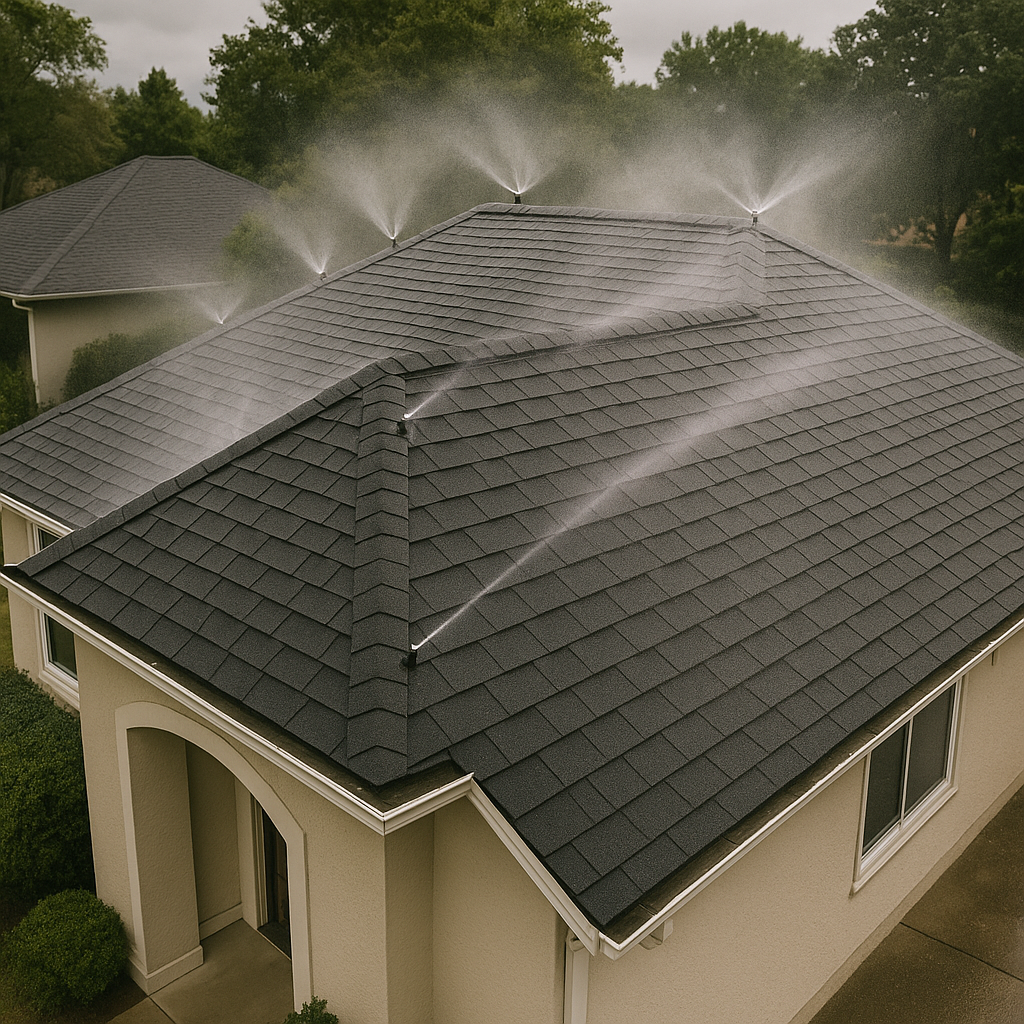
This is why the promise of a Wildfire Roof Sprinkler System is so compelling. The idea is intuitive—a network of pipes designed to douse your roof in water, creating a wet barrier against stray embers.
But in the chaos of a real wildfire, with raging winds and likely power outages, are roof sprinklers effective? The answer is complex, and understanding it can save you thousands of dollars while providing genuine peace of mind.
Why Your Home’s Biggest Threat Isn’t a Wall of Flame
When you picture a wildfire threatening a home, you probably imagine a towering wall of flames. While that’s part of the story, research shows it’s not what destroys most houses. The real danger is far more subtle and travels for miles on the wind, like a blizzard of tiny, burning sparks. These wind-blown embers are the single biggest threat to your property during a wildfire.
This phenomenon is known as an ember attack. These embers, some no bigger than a fingernail, are carried by high winds and land by the thousands on your roof, in your gutters, and on the ground nearby. If they find even a small patch of dry fuel—like a pile of pine needles, dead leaves in a corner, or flammable mulch against a wall—they can easily start a new fire.
A rooftop sprinkler’s true job is not to fight a massive inferno but to act as a shield against this storm of embers. By keeping your roof and the immediate area consistently wet, it extinguishes these sparks on contact, robbing them of the chance to ignite your home. However, the system needs two critical resources that wildfires often take away.
The Two Critical Things Your Sprinkler Needs That Wildfires Take Away
The first resource to vanish is almost always electricity. Utility companies often shut down the power grid proactively to prevent damaged lines from starting new fires, or the fire itself simply destroys the infrastructure. If your sprinkler system depends on household electricity—whether to run a well pump or power its electronic controller—it will go dead right when you need it most.
At the same time, the public water supply comes under immense strain. As firefighters tap into hydrants to battle the blaze, the pressure in the municipal water lines can plummet. This catastrophic drop means a sprinkler connected to your home’s plumbing might only produce a weak trickle instead of the powerful spray needed to douse embers effectively.
This reveals a critical flaw in basic setups. An effective exterior fire protection system for houses cannot depend on failing public utilities. It must have its own dedicated water source—like a large tank or swimming pool—and its own power, such as a generator or a solar battery backup, to allow for automatic wildfire sprinkler system activation even if you’ve evacuated.
Building a self-sufficient system is a significant upgrade from a simple hose-connected sprinkler. It adds complexity and cost, leading to the question: is it worth the investment?
Are Roof Sprinklers Worth the Investment? A Look at Real Costs
A professionally installed system, complete with a dedicated water tank and backup power, is a serious project. The real wildfire roof sprinkler system cost can range from $5,000 to over $15,000, depending on your home’s size and the system’s complexity. This price tag forces a critical question: is that the best way to spend your home-defense budget?
A cost-benefit analysis is crucial. Many fire-safety experts argue that for the same amount of money, you could fund other, more critical upgrades that provide a greater degree of protection. For a hypothetical $10,000 budget, consider the choice:
- Option A: A complete, professional roof sprinkler system.
- Option B: Replacing all vulnerable attic vents with ember-proof models, installing non-combustible gutter guards, and hiring a crew to clear 30 feet of fire-resistant landscaping (defensible space).
Experts suggest that Option B provides more certain and foundational protection. The best residential wildfire sprinkler systems are those added to a home that has already handled these fundamentals. They are a supplemental tool, not a replacement for basic home hardening. Before wetting the roof, you must secure the ground around your house.
Your First and Most Important Line of Defense: The 5-Foot “No-Fuel Zone”
Before you budget for a single sprinkler head, fire safety experts agree that your first and most effective step is creating defensible space. This is simply a buffer zone around your home that slows or stops a wildfire by robbing it of fuel. The most critical part of this buffer is the area from your foundation out to five feet, often called the “ember-resistant zone.” Think of it as a moat for your house, but instead of water, it’s an area free of anything that can burn. This is where wind-blown embers pile up, and if they find fuel, they can ignite your home’s siding.
Creating this five-foot zone is one of the most powerful wildfire safety tips you can follow. It means swapping out flammable wood mulch for gravel or stone pavers. It means removing all dead leaves, dry grass, and overgrown plants directly against the house. Any firewood stacks, propane tanks, or flammable patio furniture must be relocated at least 30 feet away. The goal is simple: when an ember lands here, it should land on something non-combustible, like dirt, rock, or concrete, and die out.
The debate over wildfire sprinklers vs. defensible space isn’t an either/or choice but a question of priority. Wetting dry mulch next to your home might prevent ignition, but removing it entirely is a more reliable solution. Securing this foundational “no-fuel zone” is the single most important action you can take to protect your home. Once that’s done, sprinklers can be considered a supplemental layer of defense.
The Verdict: Should You Get a Wildfire Roof Sprinkler System?
A sprinkler is like a seatbelt: a powerful layer of protection, but not a replacement for safe driving. It can’t save your home by itself. Whether wildfire sprinklers are worth the investment depends on the preparations you’ve already made.
A Sprinkler Is a Good Investment IF:
- You have already created a robust defensible space around your home.
- Your budget allows for an independent water tank AND a backup power source.
- Your home has other hardened features, like ember-resistant vents and a Class A fire-rated roof.
Use this checklist as your guide. If you can’t check every box, you’ve found your starting point. Focusing on that foundation first is the most effective step toward protecting your home and will empower you to make the right choice.